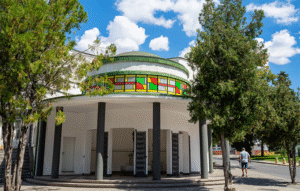
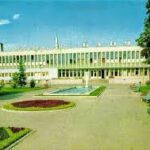
Almost half the baths on this site do not work. Some have been demolished, others turned into shops and storerooms, but many simply stand and wait — often buildings of real architectural value. Here are some of the most important.
In Sofia
The Central Bath, opened in 1913, was among the most modern in Europe and took up to a thousand people a day. Today its south wing is a museum, while the north wing — meant to remain a bath — has been fenced off and derelict for almost four decades. Ovcha Kupel of 1928 is a listed monument and since 2023 is finally being restored. Gorna Banya had over 216,000 visits in 1935; today most of its water is leased to a bottling company. Knyazhevo — the oldest surviving bath in the capital — has been closed since 2010, and its water drains into the sewer.
Around the country
The bath in Yambol, built in 1935–1938, is one of the finest examples of Bulgarian modernism; its spring has dried up, and donations are being collected for repairs. In Provadiya the 1962 bath was sold in 2004; a 2017 referendum to take it back failed. Pazardzhik's modernist bath was sold in 2013 and turned into a shop, and the refit erased its architecture. In Berkovitsa the new owner promised a spa complex that never came.
How it comes to this
- Ownership. Many baths passed from the state to municipalities, hospitals or private firms, and nobody is ready to pay for repairs.
- Concessions. The terms are often such that nobody bids — as in Shipkovo — or the concessionaire does not keep the contract.
- Water. Boreholes fail or get filled in, and some of the water goes to bottling.
- Sales. The bath in Slavyanovo was sold for BGN 5,700; the promised spa was never built.
What we can do
Attention and visits help most. When a bath works and people come, the municipality has a reason to keep it. Talk about the baths you love, write reviews and report changes — if a closed bath reopens, we will mark it at once. The baths in Oshtava and Gorna Breznitsa were built by the villagers themselves — proof that not everything depends on institutions.