Hisarya was Roman Diocletianopolis — a town walled around its hot springs. It was here, in 1882, that the first chemical analysis of mineral water in Bulgaria was made, and the authorities of Eastern Rumelia adopted the first rules for the Hisarya baths. That was the start of organised spa treatment in the country.
Where to bathe today
Momina Banya reopened in 2026 after a four-year renovation and is now a spa: small men's and women's sections with showers, basins and a pool for 4–5 people, a spa area with a large pool kept from the old Turkish bath, a sauna and steam room, and a “Royal Bath” for four. In one room you can see the ancient brick inscription and the “Roman wall”. Below the entrance is the pavilion where people fill bottles with the famous water.
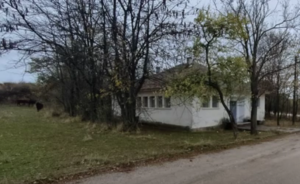
The Rusalka bath is by the West Gate in the town walls — two identical bathing halls, open to men and women every day. It is in poor condition, but it is one of the few public baths in town that still work.
About 15 km to the west, in Krasnovo, is the palace-like bath of 1928, built by the villagers' volunteer labour. Men bathe on even dates, women on odd ones.
The water
The Momina Banya spring gives water at about 46 °C — alkaline, soft, pleasant to drink and radon-bearing. It is best known for its effect on kidney stones and urological problems, so people come with canisters and drink it on prescription. The Toplitsa spring is the hottest in town (about 51 °C), and Svezhest runs between 37 and 41 °C.
The closed baths
Hisarya also shows how easily baths are lost. Toplitsa and Svezhest by the Roman baths closed in 2009 over unpaid charges. The huge New Momina Banya, with its marble pools, has stood empty for almost 20 years. Bancheto in Miromir was renovated in 2012 and sold in 2020 as unprofitable. Keep an eye on their pages — if one reopens, we will mark it.
- Mineral bath “Rusalka”, Hisarya · Hisarya, Plovdiv Province · 0.4 km
- “Momina Banya” · Hisarya, Plovdiv Province · 0.7 km
- Public mineral bath Pesnopoy · Pesnopoy, Plovdiv Province · 9.5 km
- Royal bath · Banya, Plovdiv Province · 12 km
- Mineral bath “Bancheto”, Karlovski Mineralni Bani · Banya, Plovdiv Province · 12 km
- Krasnovski mineral baths · Krasnovo (Hisarya Municipality), Plovdiv Province · 17 km